
Tory Burch Sizing: Shoes and Clothing, Right on the First Order
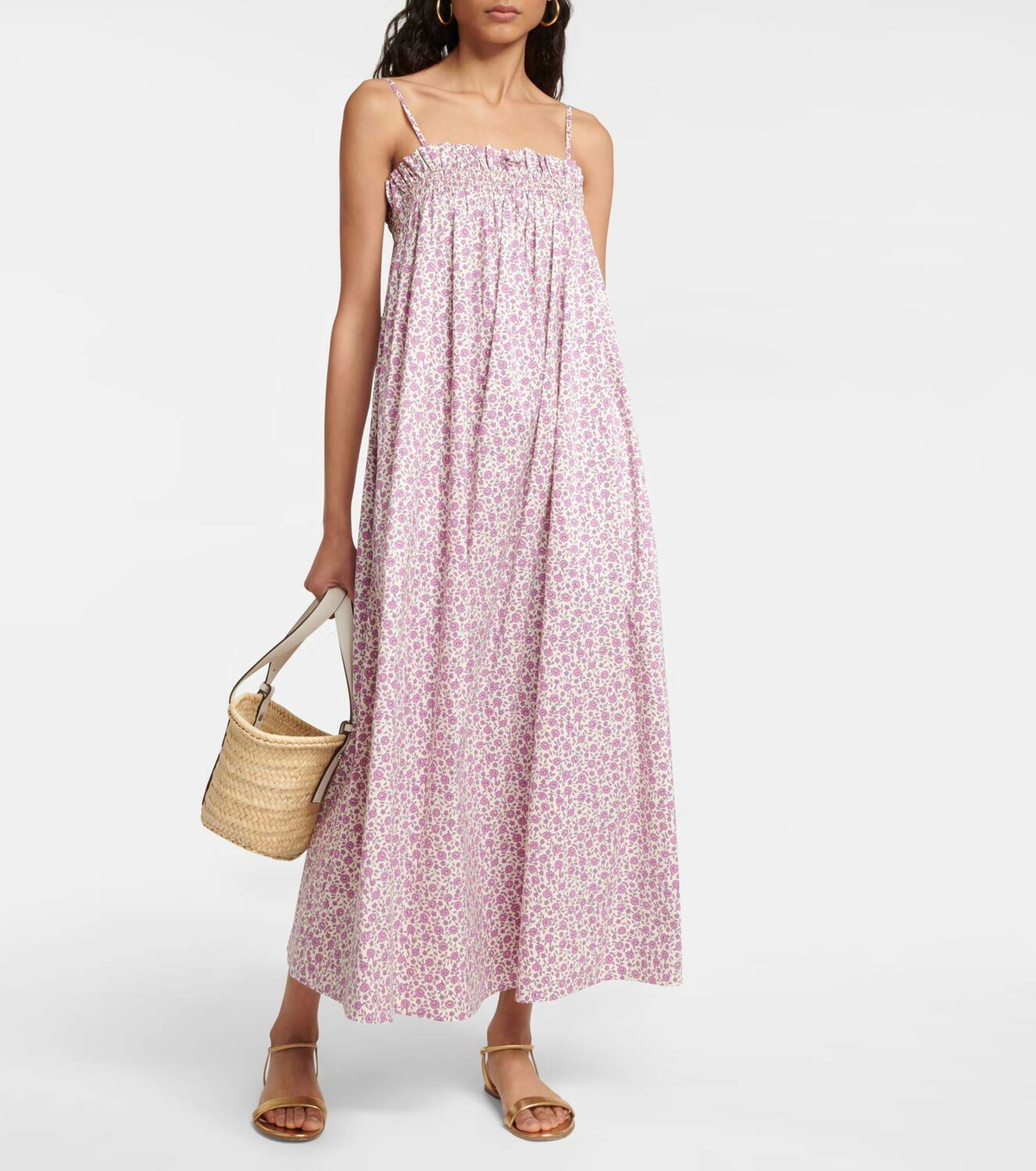
Sizing is the most common reason a Tory Burch order gets returned, and most of that can be avoided. No public fit philosophy is published by the brand, so every point here is taken from what buyers report time and again. That distinction matters: these are buyer observations from reviews and forum threads, not the brand’s own official measurements. Prices are given as reference points, and each is an observed market price, lifted from live US retail listings in September 2026. There is no set price list from the company, and the numbers shift with season, material and market. The goal here is straightforward: get the first pair or the first dress right and put an end to return-shipping costs.
What makes this label harder to size than it looks
Two separate issues muddy the picture. The first is that the footwear is built on a number of different lasts, so a size that fits in a sandal will not automatically work in a loafer. The second is naming, because Romy, Kira, Eleanor and Charlie each cover both bags and shoes, so the names cross categories. So a search on the name by itself brings back products with completely separate fit behaviour. A third complication comes from ready-to-wear, where knitwear, denim and tailoring follow different rules. Treat each category as its own sizing exercise instead of trusting one number across the whole brand.
Shoes: the tendency buyers report across the line
Most repeated of all: buyers say the footwear runs narrow. That holds across sandals, flats, loafers and closed styles, and it is the first thing to plan around. The second most repeated observation is that many styles also come up slightly small in length. Half a size up is the standard advice when you land between sizes, and the brand’s own product guidance has echoed that for its best-known sandal. This is precisely the question sitting behind most searches for tory burch shoes, and honestly tory burch bags it depends on the style. More weight falls on width, instep height and vamp depth than it would at a brand built on a single last.
Miller sandal and Miller Cloud, compared
The Miller is the gateway product and the shoe whose sizing gets discussed most. Buyers commonly report that it sits slightly small and distinctly narrow at its observed $200, and half a size up is the usual recommendation. A wide width is offered for the Miller, so it becomes one of the safer choices for a broader foot. The Miller Cloud is a cushioned variant of the same shoe rather than a separate franchise, with a moulded footbed over a dual-density core of foam. That footbed changes how the foot sits, so buyers who sized up in the original occasionally report the Cloud fitting closer to true. The observed figures came in at $225 for the Miller Cloud Sandal and $150 for the Miller Cloud Light.
The Reva, original and relaunched
The Reva ballet flat is named for the founder’s mother, Reva Robinson, and carries a history worth knowing. Because it was paused in 2017 and relaunched in 2025, buyers are now looking at two distinct shoes that share a name. Reports describe the relaunch as a redesign, with a rounder and wider toe, an enlarged logo plate, a narrower opening colour range and a mule option. The price moved sharply too, reported at roughly $330 to $350 against the original $195. Feedback on the older Reva is mixed: some call it true to size while many go half a size up, and the consistent complaint is a toe box that is narrow and a vamp that is shallow. If you are buying resale, work out which generation the listing shows, as the two do not fit alike.
Slides, loafers, sneakers and boots
The Ines slide is the minimal alternative to the Miller, and brand usage spells it without an accent. Observed pricing put the Ines Slide at $225 and the single-band version at $250, with a wide version of the slide available. For loafers the observed figures were $325 across the classic, ruched and LeeLee styles, with the tassel version at $375. Loafers are commonly reported as coming up closer to true and narrow all the same, with no room for thick socks at the true size. The sneakers were observed at $250 for the Field and ballet shapes and $300 for the trainers, and no group is more forgiving. Boots demand a second decision beyond length, since a Romy Chelsea Boot at an observed $395 has to take winter socks, and tall shafts add calf width as a third variable.
If you have wide feet
No group is disappointed more often, and there is little value in softening it. Buyer threads that have run for years report the footwear skewing narrow across the entire line rather than in a few scattered styles. Sizing up buys length first and width later, so a shoe can be too long and too tight together. There are named wide options, among them a wide width for the Miller and a wide version of the Ines Slide. Begin there, because open shapes will always treat a broad foot better than closed ones. Reports on the ballet flats are the least encouraging, because a shallow vamp cannot be sized around.
Get the measurements down before you order
Most returns are avoided by a five-minute session with a ruler. Take the measurement at the end of the day, when feet are at their largest, and do both feet, since they are seldom identical. Note the length in centimetres and the widest point across the ball of the foot as well. Tall boots need calf circumference at its widest, plus a note on whether you wear them over denim. For clothing, take bust, waist and hip measurements over the underwear you will actually wear. Store the numbers somewhere you can find them, and check them against the guidance on each product page instead of against a size you think you take.
- Foot length in centimetres, both feet, measured late in the day
- The width across the ball of the foot
- Calf circumference, for any tall boot
- Bust, waist and hip measurements for ready-to-wear
Clothing: how the ready-to-wear fits
Ready-to-wear covers dresses, tops, knitwear, skirts, denim, outerwear and swim. Tailoring is commonly reported as close to standard American sizing, with a cut through the body that is slim, not boxy. Knitwear varies most, because a merino turtleneck observed at $420 and a jacquard cardigan observed at $550 answer to different intentions. An in-house category, denim shows a slim-leg jean observed at $350 and a wide-leg at $395, and buyers report sticking to their usual size. Dresses attract more fit comment than anything else, especially the fluid viscose jersey styles observed around $550, which drape rather than hold structure. Swim is reported to run small in the way most swimwear does, and separates give the easier path to a fit.
The condensed version
The table below pulls the reports above into one view. Every entry describes what buyers commonly say rather than anything the brand states. Read the right-hand column as a starting position, then check it against your own measurements. If a style offers a wide option, take it, because it outperforms sizing up as a fix. If the report says shallow rather than merely narrow, sizing up will not rescue it. Consult it before ordering, not after the parcel lands.
| Piece | What buyers commonly say | Practical step |
|---|---|---|
| The Miller flat | A touch small and narrow | Half a size up, else the wide width |
| Miller Cloud | Cushioned footbed shifts the fit | Consider true to size |
| Reva, the earlier generation | Toe box narrow, vamp shallow | Half a size up, not one for wide feet |
| Reva, 2025 relaunch | Reported wider and rounder at the toe | Try before assuming the old size |
| The Ines slide | Reported narrow across the band | Wide version wherever it exists |
| The loafers | Close to true but narrow | Allow sock room, or go up |
| The ankle boots | Length true, little sock room | Half a size up for winter |
| The tall boots | The real constraint is calf width | Take the calf measurement first |
| Knitwear and the denim | Close to usual sizing, slim cut | Take your normal size |
Shopping without the fitting room
Sizing risk rises sharply once you leave full-price retail. Items bought in a tory burch sale event are frequently marked final sale, which removes the exchange that would otherwise fix a fit error. A physical tory burch outlet store sits at the other end of the scale and makes the best setting for a first purchase, because several sizes can be tried in one visit. Nordstrom Rack and TJ Maxx both carry the brand, and both let you try before buying. For fit, resale is the highest-risk channel, because listings often show a size without saying which generation of a style it is. Rather than trusting the marked size, ask a resale seller for the insole length in centimetres.